
3 hr
Sava River Whitewater Rafting from Bled
Navigate alpine rapids with mountain views, swim at the river confluence, and leap from rocky ledges.
Reserve
Hand-picked by our editors — only the best 5 rafting experiences from 14 reviewed.
Verified partners for every tour, free cancellation where available, and instant confirmation on every booking.
3 hr
Navigate alpine rapids with mountain views, swim at the river confluence, and leap from rocky ledges.
Reserve
3 hr
Navigate exciting rapids and pristine waters on this guided rafting journey through Slovenia's scenic river valley.
Reserve
2 hr 30 min
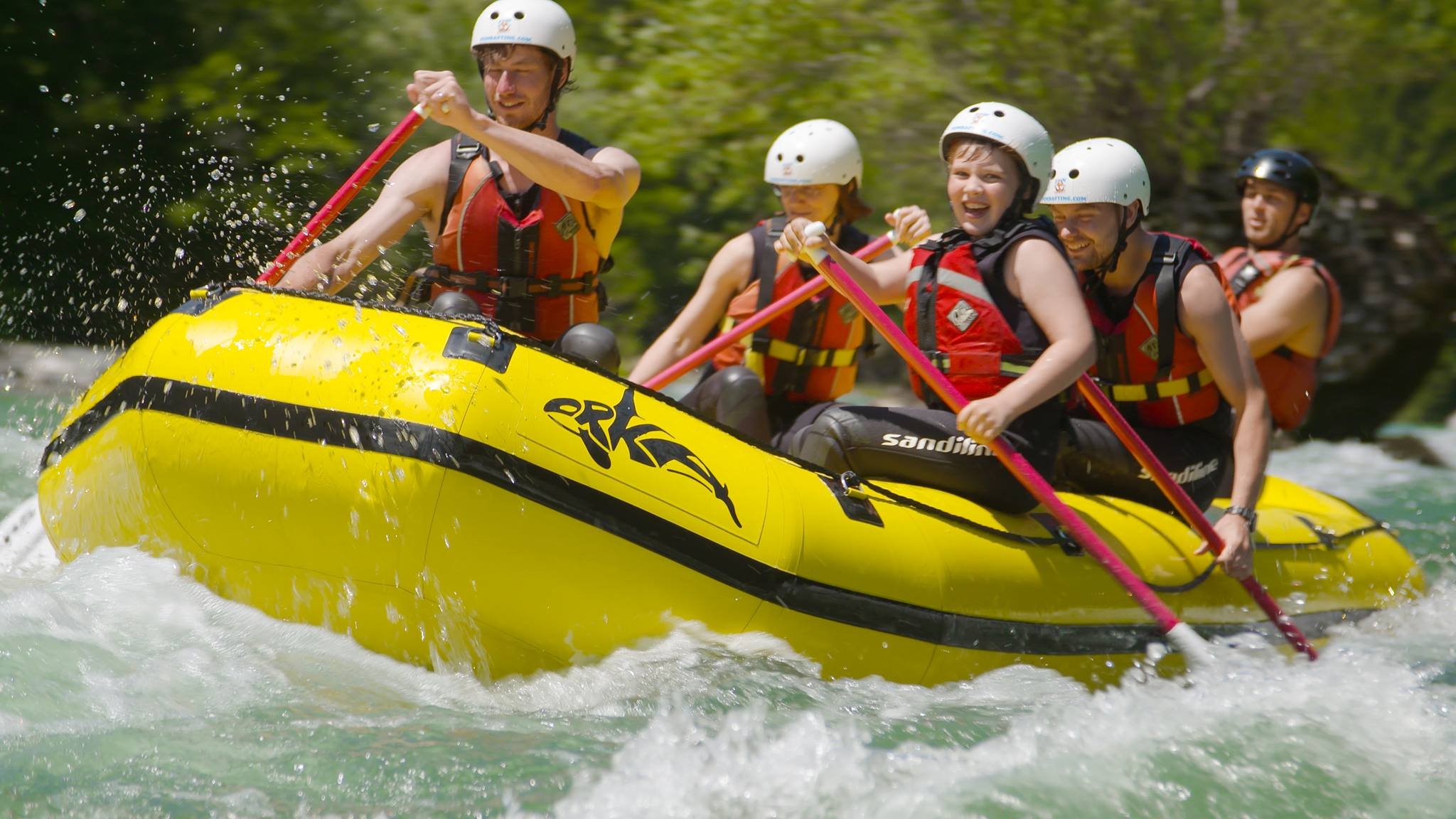
Family-friendly rafting on emerald waters with pro guides, full gear, and scenic Class II rapids
ReservePrices from verified partners. Availability updates in real time at checkout. Free cancellation policies apply where shown.
The landmarks, rooms, and views travelers on this tour remember — all visible on a single visit.
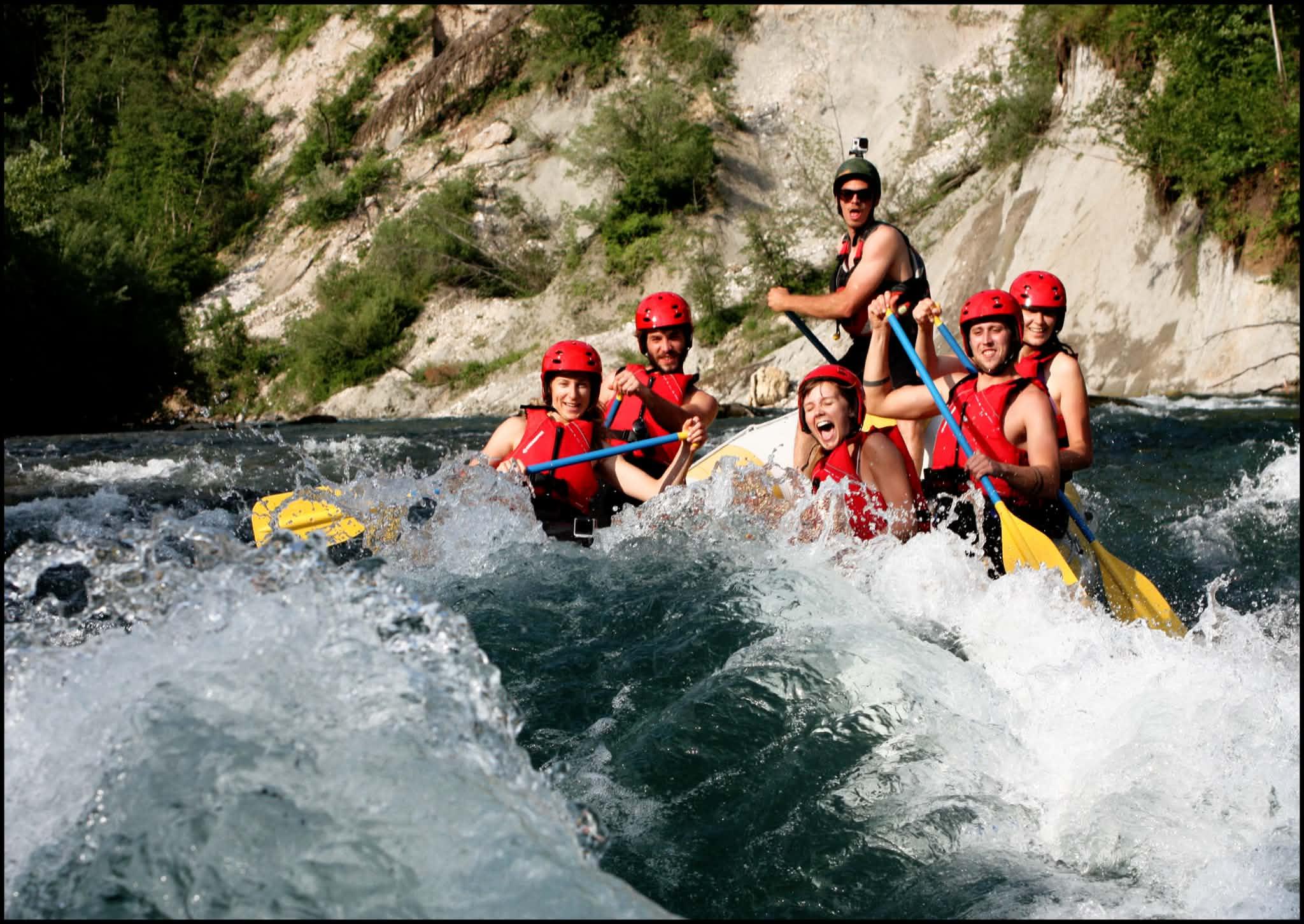
Features class II and III rapids ideal for a fun, moderate Sava Dolinka river rafting challenge.
The narrow limestone walls provide a scenic backdrop during the Sava Dolinka river rafting tour.
Observe local wildlife and dense forests lining the river banks.
The crystal-clear water is a hallmark of the Sava Dolinka river rafting experience.
Sava Dolinka River rafting offers a relaxed family experience near Bled, while the Soča River provides high-intensity whitewater for adrenaline seekers.
| Feature | Top pick Sava Dolinka | Soča River |
|---|---|---|
Primary Appeal |
Relaxed family flow | High-intensity whitewater |
Travel Time from Bled |
10–20 minutes | 60–90 minutes |
Intensity Level |
Class I–II rapids | Class III–IV rapids |
Scenery |
Lush riverbanks and forests | Emerald water and alpine canyons |
Best For |
Families and beginners | Adventure enthusiasts and experts |
| See tickets → |
Verdict: Choose the Sava Dolinka river rafting tour for convenience and ease, or head to the Soča Valley when your group requires challenging Sava Dolinka river rafting tickets for a more rugged expedition.
Choose your ticket, select your date, and reserve in under two minutes. Secure checkout handled by our verified partner.
Instant confirmation by email, with a mobile voucher you can save offline. No printing, no queuing at a collection desk.
Arrive at the entrance, show your voucher on your phone, and walk in. Most tickets include priority or skip-the-line access.
Practical details for your visit straight from our verified partners — hours, access, rules, and how to get there.
Bled, Slovenia
Confirm address with your booking confirmation
Driving is the most flexible way to reach Sava Dolinka river rafting locations near Bled.
Buses run regularly to Bled from Ljubljana central station.
Wear swimwear, a quick-dry t-shirt, and secure footwear that can get wet. Helmets and life vests are provided by your Sava Dolinka river rafting tour guide.
Leave valuables in a locker at the base or in your vehicle. Waterproof bags are sometimes available through Sava Dolinka river rafting operators.
Use a waterproof action camera mounted to your helmet or a chest harness. Standard mobile phones are risky due to potential water damage.
Participants should be able to sit for extended periods and climb in and out of rafts. Discuss specific needs with the Sava Dolinka river rafting tour provider before booking.
Do not take your phone on the raft unless it is in a professional-grade waterproof pouch. Sava Dolinka river rafting tours often involve splashing and potential submersion.
Most operators require children to be at least 6 years old to participate in Sava Dolinka river rafting tickets. Verify minimum age requirements with the specific tour provider.
Carry a bottle of water during your Sava Dolinka river rafting tour. Many providers offer snacks or a drink at the end of the excursion.
Pets are generally not permitted on raft boats for safety reasons. Contact the Sava Dolinka river rafting tour operator to confirm their specific animal policy.
Listen carefully to the safety briefing before starting your Sava Dolinka river rafting adventure. The Sava River temperature can be cold even in summer.
Best time to go, insider tips, nearby landmarks, and the cancellation fine print — flip through to skim what matters to you.
How crowds, weather, and events shift across the year.
Ideal weather conditions for rafting with water temperatures around 12-15 degrees Celsius.
Higher water levels from snowmelt provide a more intense Sava Dolinka river rafting tour.
Water levels decrease, creating a more relaxed Sava Dolinka river rafting experience.
Stable weather and pleasant air temperatures make this a popular time for Sava Dolinka river rafting.
Small details that turn a good visit into a great one.
Sava Dolinka river rafting tours fill up fast in August.
The river reflection intensifies sun exposure.
Safety instructions are essential for a smooth Sava Dolinka river rafting experience.
Morning departures are best for avoiding afternoon storms.
Drink water before and after your Sava Dolinka river rafting session.
Non-bookable sights within a short walk — free to visit, easy to pair.
Iconic glacial lake with a picturesque island church.
Wooden boardwalks over a turquoise river canyon.
Medieval fortress perched on a high cliff above the lake.
Authentic town known for its preserved historical architecture.
Flexible, no hidden fees.
Sava Dolinka river rafting tour providers typically offer full refunds if cancellation occurs at least 24 to 48 hours before the scheduled departure. The activity itself has an entrance fee of 0 EUR as it is a public waterway.
Hand-picked options within walking distance — pick a district for vibe, or a specific hotel for convenience.
Wide selection of hotels and guesthouses near the Sava River.
Quiet residential area with charming local stays.
The Sava Dolinka rises at 833 metres beneath Triglav's north face and drops 170 metres in its first fourteen kilometres, carving a granite-walled corridor through the Radovljica basin that has drawn paddlers since the Yugoslav kayak federation mapped the section in 1967. Unlike the Soča's glacial turquoise, the Sava Dolinka runs tea-coloured from tannins leached out of subalpine peat, its transparency masking boulder gardens that shift every spring when snowmelt rewrites the channel. Commercial sava dolinka river rafting began in 1992 when three Bled hoteliers bought a fleet of self-bailing rafts and hired Slovenian Olympic slalom coaches to guide tourists through the Bela–Zasip reach, a five-kilometre stretch punctuated by four named rapids—Peračica, Podkraj Drop, the S-Bend, and the terminal wave train at Mlino. The gorge remained a specialist destination until 2003, when the European Canoe Association granted the river a Class II–III rating and insurance underwriters approved guided trips for non-swimmers wearing EN ISO-certified buoyancy aids. Today the Sava Dolinka absorbs roughly 18,000 raft-days per season, ninety percent of them launched from Bled's lakeshore operators. The geology that shapes the rapids is a legacy of the Würm glaciation: 25,000 years ago the Bohinj glacier terminus sat two kilometres upstream of present-day Bled, and its meltwater torrents scoured a step-profile riverbed through Triassic limestone and dolomite. Where softer marl layers eroded faster, the river incised potholes and undercut ledges that now form the hydraulic features commercial rafts navigate. The S-Bend, a double-apex chicane at kilometre 8.2, exposes a fault scarp where Dinaric thrust sheets override the Southern Alps basement—a textbook outcrop geology students hike in to photograph between raft convoys. Water temperature holds between 11 and 14 degrees Celsius from May through September, fed by karst springs that buffer the flow against summer droughts. Peak discharge occurs in late April when the snowpack above 1,800 metres collapses in a two-week pulse, raising the river 1.2 metres and upgrading several rapids to Class III+. Outfitters suspend novice trips during this window and run the gorge only with paddlers holding prior whitewater experience, a protocol that has kept the Sava Dolinka's incident rate below 0.8 events per thousand raft-days since 2010.
"The Sava Dolinka drops 170 metres in fourteen kilometres, carving a granite-walled corridor that has drawn paddlers since 1967."
A step-by-step walkthrough of the visit — what you'll see, how long each stage takes, and the details that matter.
You meet your group at the Mlino put-in nine kilometres west of Bled, where your guide briefs you on paddle commands and demonstrates the high-side lean that keeps a raft upright in standing waves. Neoprene booties go on first, then the buoyancy vest, cinched tight enough that two fingers slip under the shoulder straps but no looser. The raft seats seven plus the guide, who takes the stern platform and uses a fourteen-foot oar to pivot the boat through hydraulic features you cannot read from water level. Peračica arrives four minutes into the run—a one-metre ledge drop flanked by limestone walls that funnel the current into a single tongue, the raft's bow submerging for three seconds before the stern clears and you paddle hard-forward to escape the recirculating foam pile. Podkraj Drop is wider and shallower, its gradient spread across twenty metres of cobble bar where you feel the raft scrape gravel if the guide's line drifts left. Between rapids the current slows to walking pace and you drift past gravel banks where grey wagtails probe the shingle and the forest canopy closes overhead, filtering the light to a green dimness broken only where the river bends and the sky opens above the outside curve. The S-Bend is the technical crux: two tight turns separated by twelve metres of flat glide, the first apex guarded by a limestone pillar that pins rafts if you miss the entry angle. Your guide calls for a draw stroke on river-left and the raft pivots just wide of the rock, then accelerates into the exit wave train where three standing waves soak the bow paddlers and the guide leans back to lift the stern over the hydraulic. The takeout is a gravel ramp two hundred metres downstream, where a van waits to shuttle you back to Bled.
The river is open daily from 09:00–18:00.
There is 0 EUR entrance fee for the river itself, though guided Sava Dolinka river rafting tours charge for their services.
The best arrival window is 09:00–14:00 to avoid late-afternoon weather shifts.
Yes, families are welcome, provided participants meet the minimum age requirements set by the Sava Dolinka river rafting provider.
Yes, but only with secure, waterproof cameras during your Sava Dolinka river rafting adventure.
Sava Dolinka river rafting tickets can be booked through the operator websites or local kiosks.
Age limits depend on the specific Sava Dolinka river rafting operator, typically starting around 6 years old.
Sava Dolinka river rafting tours usually proceed in the rain unless conditions are deemed unsafe.
Yes, the Sava River is glacier-fed and remains refreshing during a Sava Dolinka river rafting tour.